AU
 AT
 BE
 BG
 CA
 HR
 CY
 CZ
 DK
 EE
 FI
 FR
 DE
 GR
 GG
 HU
 IE
 IM
 IT
 JE
 LV
 LT
 LU
 MT
 NL
 NZ
 PL
 PT
 RO
 SK
 SI
 ES
 SE
 GB

SPF Isn’t Just for Summer - Here’s Why You Need It Every Single Day
UVA rays don't follow the weather. Here's why daily SPF matters all year round, and how to choose one you'll actually want to wear every morning.

Most of us pack the sunscreen away with the flip-flops at the end of August. It feels sensible. The sun's lower, and you can't remember the last time you felt properly warm outside.
The trouble is that the rays doing the most long-term damage to your skin don't follow the weather. They're still there on a grey Tuesday in November, and they're coming through your window right now.
UVA and UVB: the difference that matters
Sunlight carries two types of ultraviolet ray that reach your skin. UVB is the one you can feel. It burns, and it's strongest around the middle of the day in summer. In a British winter, it drops right off.
UVA is quieter. It doesn't burn, so you don't notice it, but it makes up around 95% of the UV that reaches the ground. Its levels stay far steadier through the year than UVB's do. It also passes through cloud and ordinary window glass.
UVA travels deeper into the skin, where it breaks down collagen and elastin over time. That shows up years later as fine lines and uneven pigmentation. If you're using retinol or vitamin C to tackle those exact things, skipping SPF means undoing a good chunk of the work.
UV exposure is also the main cause of most skin cancers, which is why we run our 365 Days of SPF campaign to get more people wearing it all year round. Jessica Zbinden-Webster, who was diagnosed with melanoma at 26, explains why it matters to her in her story, and you can hear her talk about it on our Skincare & Beyond podcast.
Choosing a sunscreen you'll actually wear every day
The best daily SPF is the one you're happy to put on every morning. If it feels greasy or stings your eyes, you'll find reasons not to bother. That's human, and it's why texture matters as much as the number on the front. Look for SPF 30 or above, and check it says broad spectrum or carries a UVA logo, so you know both types of ray are covered. Our short video on what broad spectrum SPF means explains the difference quickly, and the same advice applies whatever your skin tone, as our guide to why every skin tone needs SPF explains.
For most skin types, La Roche-Posay Anthelios UVmune 400 Invisible Fluid SPF 50+ is a reliable everyday pick. It's light, fragrance-free and doesn't sting around the eyes, which matters more than you'd think when you're wearing it daily.
Oily or breakout-prone skin often struggles with heavier formulas. Vichy Capital Soleil UV-Clear Mattifying Sun Protection SPF50+ contains a little salicylic acid and niacinamide and keeps shine down for hours. Our sunscreens for oily skin edit has more options, and our guide to SPF for acne-prone skin goes into more detail. There are quick tips in our oily, acne-prone skin video too.
If your skin is dry or showing signs of ageing, you might prefer an SPF that doubles as your moisturiser. Dermalogica Dynamic Skin Recovery SPF 50 has a medium-weight texture with antioxidant white tea, so it's comfortable on its own in colder months. Browse our sunscreens for dry skin for alternatives, or watch our video on the best SPF for dry skin.
Sensitive or reactive skin tends to get on better with mineral filters. haruharu wonder Black Rice Pure Mineral Relief Daily Sunscreen SPF50+ uses non-nano zinc oxide with soothing heartleaf and leaves a soft satin finish rather than a chalky one. You'll find more in our mineral sunscreens collection, and our guide to physical vs chemical sunscreens explains the difference. Prefer to watch? Our chemical vs mineral SPF video covers the same ground.

How to make it part of your routine
SPF goes on last in your morning routine, after serum and moisturiser and before make-up. Use about two finger-lengths for your face and neck, as our how to apply sunscreen video shows. Most people apply around half of that, which gives far less protection than the number on the bottle.
Don't forget your lips. They have very little natural protection, and Ultrasun Lip Protection SPF 30 is easy to keep in a coat pocket, and it helps with winter chapping too.
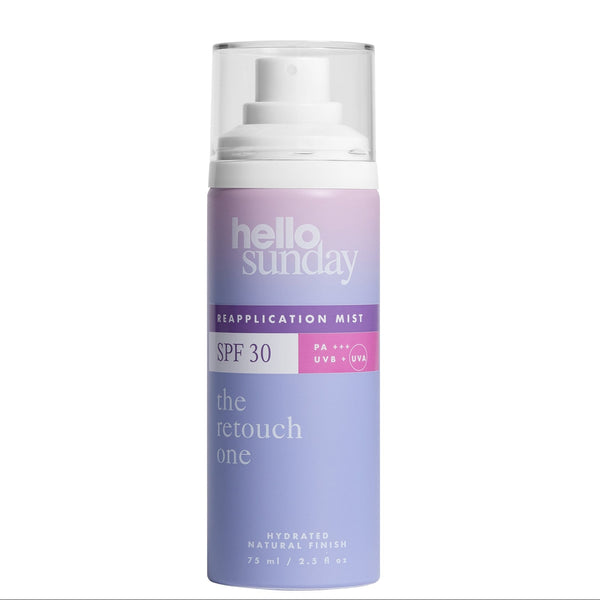
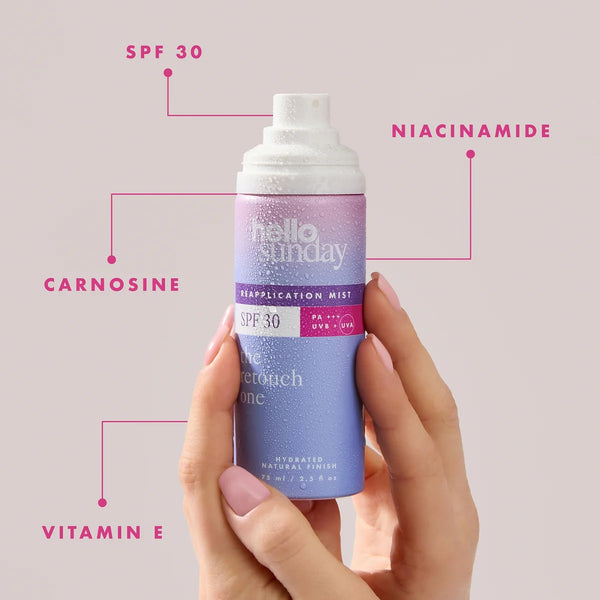
Reapplying is the part most of us skip. If you're mostly indoors, away from windows, one morning application of SPF in winter is usually enough. Outdoors, or sat by a sunny window, top up every couple of hours. Over make-up, Hello Sunday The Retouch One Reapplication Mist SPF 30 makes that far less fiddly. There's more detail in our guide to applying and reapplying SPF correctly.
"SPF is the one non-negotiable skincare step that everyone should be incorporating into their regime regardless of age, skin type or skin colour."
- Kimberley Medd, Head of Clinic & Customer Experience
Daily SPF FAQs
Do you need sunscreen in winter?
Yes. UVB drops off in the colder months, but UVA stays fairly steady and still reaches your skin through cloud and glass. That's why a daily SPF in winter is still worth wearing.
Do I need SPF if it's cloudy?
Yes. Most UVA passes through cloud, so a grey day still counts. It's one of the most common ways people get caught out.
Is the SPF in my foundation enough?
Usually not. You'd need to wear far more foundation than anyone does to get the protection on the label. Treat it as a bonus on top of a proper SPF. Our short on SPF foundation vs tinted sunscreen explains why.
Do I need SPF indoors?
If you sit near a window for long stretches, it's worth wearing. UVA passes through standard glass, while UVB mostly doesn't.
Does wearing SPF every day stop me getting vitamin D?
In the UK winter, the sun is too weak for your skin to make much vitamin D anyway. The NHS advises considering a supplement from October to March.
Shop Our Daily SPF Edit