How Now Often Always Helps Take The Guesswork Out Of Women’s Health
In our latest Skincare and Beyond podcast, we spoke to Megan, Head of Nutrition at NOA, about supplement overwhelm, the connection between skin and wellbeing, and how personalised insight can help women...

At Face the Future, we have always believed that self-care should feel personal. Your skin changes. Your lifestyle changes. Your hormones, energy, sleep and stress levels can all shift too (we've all been there). So, the advice you receive should be able to meet you where you are.
By now, you've probably seen our new partnership announcement. And it's exactly this level of care that makes our collaboration with Now Often Always such a natural fit.
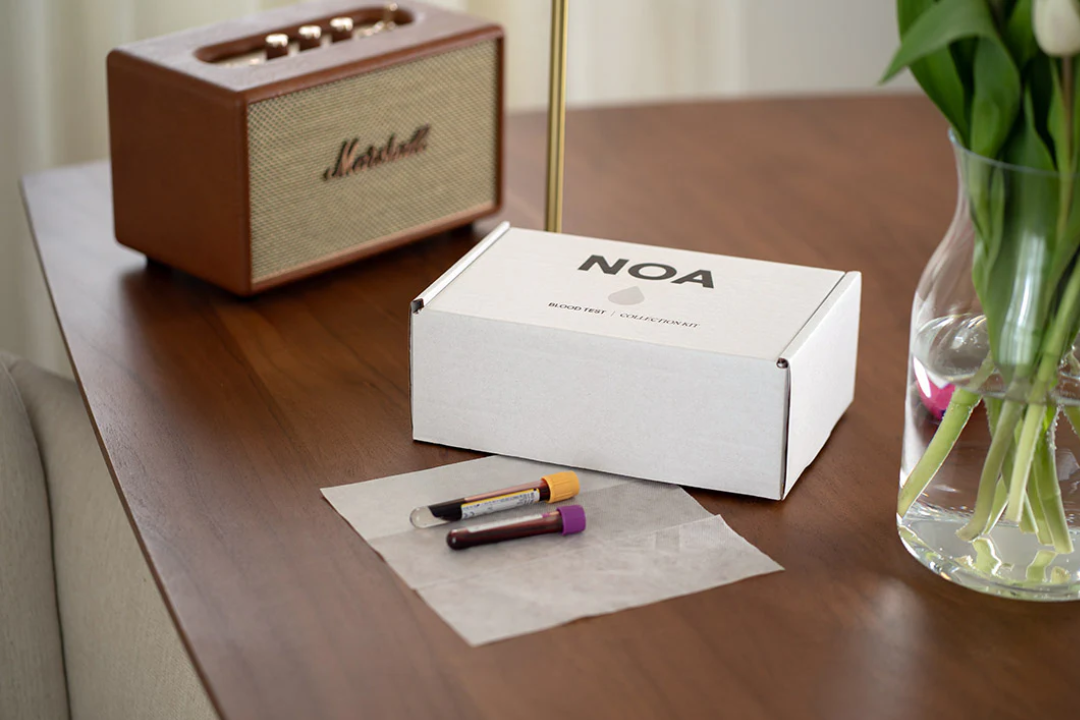
NOA is a women’s health and wellbeing brand built around personalised insight. Through blood testing, detailed questionnaires and expert nutritionist-led support, NOA helps women better understand what is happening internally, rather than relying on guesswork.
For their Head of Nutrition, Megan, who joined us on Skincare and Beyond, that work starts with listening closely to your body.
“My role is giving the one-to-one consultations, looking through blood tests, looking through questionnaire results, and taking all of that information to create a hyper-personalised plan for our customers,” she explains.
That word, personalised, really matters. Two people can both feel tired, bloated or foggy, but the reason behind those symptoms may be completely different. So, the support they need should not be identical either.
Why Supplements Shouldn’t Be Guesswork
Supplements often get positioned as the quick fix. Low energy? Take this. Skin breaking out? Try that. Feeling stressed? Add another capsule to the collection.
Before you know it, you’re taking six different things and still wondering why you feel exactly the same. NOA's approach is much more considered.
“You are not leading with a supplement,” Megan says. “Ideally, your diet is feeling really well-rounded, and it’s varied, and you’re eating enough, and you’re enjoying what you’re eating. Then you come in and fill the gaps with supplements.”
It is a refreshingly grounded take in a world where supplement advice can feel more overwhelming than ever.

What do those gaps look like? Megan explains that if someone does not eat fish, omega-3 may be worth considering. If someone has limited sun exposure, vitamin D may come into the conversation. The point is that those decisions should be based on the person, not the trend.
Filtering through the overwhelming supplement noise online can be daunting, not knowing what you are supposed to be taking for you. It can mean money spent in the wrong places, a routine that feels impossible to keep up with, and still no real understanding of what your body actually needs.
As Megan puts it, “It’s a lot of money that’s being wasted, or it’s potentially harmful, because you’re maybe taking things that you don’t need.”
Just Because It’s Common Doesn’t Mean It’s Normal
One of Megan’s most powerful points from the conversation was simple: “Just because it’s common doesn’t mean it’s normal.”
It is the kind of sentence that makes you stop for a second, because so many women are used to brushing symptoms off.
Ever caught yourself thinking... Painful periods? That’s just part of it. Bloating? Probably normal. Brain fog? Must be a busy week. Waking up groggy even after sleeping? Time for another coffee and hope for the best.
“Your period shouldn’t be painful,” Megan says. “You shouldn’t be feeling like you can’t make it through the day.” It is about giving women permission to stop dismissing the things their bodies keep trying to flag.
Megan also speaks to many women who feel they have already tried to find answers, but still do not feel heard.
“We speak to women who have gone to doctors, gone to healthcare professionals, and just feel unheard,” she explains. “They feel as though they’re at this dead end, and they’re not really getting anywhere with it.”
That feeling of knowing something is not quite right, but not knowing where to go next, is exactly where a more personal approach can make such a difference.
Most Common Symptoms Megan Sees in Women
1. Fatigue That Sleep Doesn’t Fix
Fatigue is one of the most common symptoms Megan sees. Not just the 'I stayed up too late scrolling' kind of tired. The kind that lingers. The kind where you are getting sleep, but still waking up feeling like your battery never quite made it past 42%.
“We see a lot of fatigue that doesn’t seem to be fixed by sleep,” Megan says. “Women are sleeping well, getting enough sleep, but still wake up and feel groggy and don’t quite feel right.”
So, what could be going on?

The Blood Sugar Rollercoaster
For some women, energy dips can be linked to the rhythm of the day. You wake up, everything is already happening, you grab a coffee, maybe a cereal bar, maybe breakfast becomes a concept rather than an actual meal. Then your energy starts climbing, dipping and crashing before lunch has even had a chance.
“It’s quite easy to fall into a bit of a blood sugar rollercoaster,” Megan says. “If you’re on that blood sugar rollercoaster throughout the day, that’s going to leave you feeling depleted.”
This is not about making anyone feel guilty for having a busy morning. We have all had the kind of day where coffee becomes breakfast, and lunch is whatever you can find between meetings. But it does show how everyday patterns can quietly shape the way we feel.
Nutrient Depletion
Nutrients are another key part of the fatigue picture. At NOA, Megan explains, “We test nutrients, so we look at your B12, your folate, your iron and your vitamin D, and all of those play a role in vitality and energy.”
Sometimes, one of those markers may not be where it ideally needs to be. Vitamin D can be affected by limited sunlight exposure, especially in the UK. Iron can be impacted by heavier periods. Long-term dieting, under-eating or simply not having enough time to properly fuel yourself can also leave the body feeling depleted.
This is where testing can help move things away from guessing. As Megan says, “We use testing as almost a process of elimination.”
Stress and Always-On Living
Of course, fatigue is not always about one nutrient, one breakfast or one early night. Life asks a lot. Work, family, friends, home, messages, appointments, mental lists, actual lists, and the five tabs open in your brain that no one else can see. Even the good things can take energy.
“There is a lot being asked of us,” Megan says. “External stresses, even if they are wonderful things, can still be draining.”
That always-on feeling matters. Megan talks about stress and nervous system dysregulation as a common thread, especially when women feel as though they are constantly in fight-or-flight mode. When your body feels under pressure for long enough, it makes sense that your energy may start to feel harder to access.
2. Brain Fog and Mental Energy
Then there is brain fog. That fuzzy, frustrating feeling where your thoughts are moving slowly, your focus has disappeared, and the word you need has apparently gone on annual leave. Megan describes it clearly: “There’s a lot of ‘I can’t find my words, I can’t focus,’ and this fuzzy, foggy feeling.”

Brain fog and fatigue often sit close together. “They go hand in hand,” Megan explains. “It’s almost mental energy and physical energy.”
For some women, this might look like struggling to concentrate at work. For others, it might be losing their train of thought mid-sentence, feeling less sharp than usual, or finding conversations more draining than they used to.
Hormones can also play a role. Megan explains that as oestrogen and progesterone fluctuate across the menstrual cycle and across life stages such as pregnancy, postpartum, perimenopause and menopause, mental energy and articulation can shift too.
It is another reminder that symptoms rarely exist neatly in their own little box. Megan also makes an important point: “Deficiencies can disguise as hormone imbalance.” In other words, what feels hormonal may sometimes have other layers worth exploring, from nutrient status to sleep, stress and wider lifestyle factors.
3. What Your Skin Might Be Telling You
When our skin changes, it is natural to look at the products first. The cleanser. The serum. The moisturiser. The SPF. The new treatment you started recently and are now watching with deep suspicion.
And yes, topical skincare matters. A lot. But sometimes, skin can also be one visible part of a wider picture. Megan explains that acne can be common where higher androgens are involved, and that the gut and skin are closely connected too.
“Your gut microbiome and your skin microbiome are closely linked,” she says. “So if you have a gut microbiome that is a little bit imbalanced, maybe we might see that in your skin.”
This does not mean every breakout is down to your gut, your hormones or your diet. Skin is complex, and acne can have many causes. But if skin changes are happening alongside bloating, fatigue, poor sleep or cycle changes, it may be worth looking beyond the surface too.
Nutrition can play its part as well, “If you’re not eating a variety of different foods and you’re not getting a variety of different nutrients, that may then show up in your skin and your hair and your nails,” Megan explains.
Stress, Sleep and Skin Repair
Stress and sleep are also part of the skin conversation.
Megan tells us that when the body is stressed, it prioritises what it needs for survival. Skin and hair are not always first in line. “If you’re stressed, your body doesn’t want to send its resources and its energy to your skin or your hair, because your hair and your skin aren’t going to save your life,” she says.
It makes sense. When your body feels like it is constantly responding to pressure, glow is not exactly top of the emergency list.
Sleep matters too. “We repair during sleep,” Megan says. “So if you’re not sleeping well, you’re not giving your body enough time to repair.”
How NOA Helps Quiet The Noise
When you are tired, foggy, bloated, breaking out, sleeping badly or just not feeling like yourself, the last thing you need is another hundred opinions on what you should be taking, eating, tracking or cutting out.

NOA’s role is to help cut through that noise.
As Megan explains, “We wanted to quiet the noise and allow our customers to gain clarity, but also gain this plan that was just for them, not for their best friend, not for anyone else.”
That personalised approach is built from several layers of information, rather than one symptom or assumption.
NOA uses comprehensive blood testing to look at markers including:
- Nutrients
- Thyroid hormones
- Cholesterol
- Blood sugar
- Liver markers
- Kidney markers
Customers also complete a detailed questionnaire, giving the NOA team more context around:
- Family history
- Lifestyle
- Medications
- Current supplements
- Symptoms and concerns
From there, Megan or a member of the NOA team brings the information together to create a personalised plan, which can include:
- Nutrition recommendations
- Lifestyle recommendations
- Supplement recommendations
NOA also looks at how you actually feel, not just whether a result sits within a broad normal range. “If you’ve got low-normal levels and you’re still feeling it, we want to take it seriously,” Megan says.
Discover NOA With Face the Future
Our conversation with Megan is a reminder that women should not have to guess their way through their well-being.

As Megan says, “We don’t just want you feeling good. We want you feeling amazing.”
Listen to the full episode of Skincare and Beyond with Face the Future to hear more from Megan, Head of Nutrition at NOA, or explore NOA with Face the Future to discover a more personalised way to understand your health and wellbeing.
Try Now Often Always